Source aramid yarn fiber optic cable for FTTH, Underground, Aerial
Compare 30 listings of aramid yarn fiber optic cable suitable for FTTH, underground, duct, and aerial applications. Buyers can evaluate specifications like tensile strength, operating temperature, and certifications from verified Chinese manufacturers.
Key considerations
Products List




Comprehensive Sourcing Guide
Strategic Sourcing Guide for Aramid Yarn Fiber Optic Cable
Understanding Technical Specifications and Structural Integrity
When sourcing aramid yarn fiber optic cable, the primary objective is to identify a product that balances high tensile strength with optical performance. Aramid yarn, often recognized by its trade name Kevlar, serves as the critical strength member in these cables. Its inclusion is essential for applications where the cable must withstand significant pulling forces during installation or endure mechanical stress in the field. Based on observed market data, buyers should look for cables where the allowed tensile strength falls within the range of 100N to 1000N. This range indicates a product capable of handling standard installation tensions without risking fiber breakage.
The physical construction of the cable is equally vital. The core configuration often varies between single-mode and multicore options. Single-mode fiber is typically preferred for long-distance communication, while multicore configurations support shorter-range, high-density data transmission. The fiber type itself is a critical specification; common variants include G652, G655, G657, and multimode options like OM1, OM2, and OM3. Buyers must verify that the specific fiber type matches the intended network architecture. For instance, G657 fibers offer superior bend resistance, which is advantageous for indoor or tight-radius installations.
The outer sheath material also dictates the cable's environmental resilience. Observed specifications indicate that jackets are commonly manufactured from PVC, LSZH (Low Smoke Zero Halogen), or PU (Polyurethane). PVC offers general durability and cost-effectiveness, whereas LSZH is mandatory for indoor applications in public spaces due to its low toxicity during combustion. The cable's shape is typically round wire, and the diameter often adheres to standard dimensions of 2.0mm or 3.0mm for patch cords, while bulk cables may vary based on the number of fibers and the thickness of the strength members.
Compliance and Certification Verification
In the B2B procurement of fiber optic cables, compliance is not merely a formality but a prerequisite for market entry and operational safety. Buyers must rigorously verify that suppliers possess valid certifications. The most frequently observed certifications in the current market landscape include RoHS (Restriction of Hazardous Substances) and ISO9001. RoHS compliance ensures that the cable materials do not contain restricted hazardous substances, which is a legal requirement in many jurisdictions, particularly the European Union. ISO9001 certification indicates that the manufacturer adheres to a recognized quality management system, suggesting a consistent production process.
Additionally, the CE marking is a common observation, signifying conformity with health, safety, and environmental protection standards for products sold within the European Economic Area. While some listings may mention CE, buyers should treat this as an observation of the supplier's claims rather than a guaranteed status for every batch without further documentation. Other certifications, such as SGS, may also be present, providing third-party validation of product quality. It is crucial to request current certification documents rather than relying solely on marketing materials.
The origin of the product is another factor in compliance. A significant portion of the observed supply originates from China, with specific manufacturing hubs noted in Guangdong. While this does not inherently imply a quality deficit, it necessitates a thorough review of the supplier's export history and adherence to international standards. Buyers should also check for specific industry standards, such as Yd/T 769-2003, which may be referenced in product specifications for optical fiber cables. Verifying that the cable meets these specific national or international standards is essential for ensuring that the product will perform as expected in the intended environment.
Cost Drivers and Pricing Dynamics
The pricing of aramid yarn fiber optic cables is influenced by a complex interplay of material costs, manufacturing complexity, and order volume. The observed price range in the market spans from approximately $0.02 to $37.07 USD. This wide disparity is not indicative of a single product type but rather reflects the diversity of the category, ranging from simple patch cords to complex armored bulk cables. The lower end of the price spectrum typically corresponds to basic indoor patch cords or short-length cables with minimal armor. Conversely, the higher price points are associated with specialized cables featuring heavy armor, LSZH jackets, or custom configurations.
Material costs are a primary driver. The inclusion of aramid yarn adds to the base cost compared to cables that rely solely on fiberglass or plastic strength members. Furthermore, the choice of jacket material significantly impacts the price; LSZH compounds are generally more expensive than standard PVC. The number of fibers within the cable is another critical cost factor. A cable with a higher core count, such as a multicore configuration, will inherently cost more due to the increased amount of fiber and the complexity of the stranding process.
Order volume plays a decisive role in the final unit price. The Minimum Order Quantity (MOQ) observed in the market ranges from 1 to 10,000 units. Buyers purchasing small quantities, often for testing or immediate deployment, will face higher per-unit costs. In contrast, bulk orders can leverage economies of scale to reduce the price significantly. Customization is a key variable; while many suppliers offer OEM services and custom lengths, these bespoke requirements often incur additional setup fees and higher unit costs. Buyers should carefully balance the need for customization against the budget constraints, as standard products often provide the most cost-effective solution.
Typical Applications and Deployment Scenarios
Aramid yarn fiber optic cables are engineered for versatility, making them suitable for a wide array of deployment scenarios. The primary application identified in the market is FTTH (Fiber to the Home), where the cable must be robust enough to withstand the rigors of last-mile installation. In these scenarios, the cable often needs to be pulled through conduits or aerially strung between poles, requiring the high tensile strength provided by the aramid yarn.
Beyond residential applications, these cables are extensively used in underground, duct, and aerial installations. The "Armoured Cable" attribute is particularly relevant here, as armor provides protection against rodent damage, crushing forces, and environmental stress. For underground and duct applications, the cable must resist lateral pressure, with observed specifications indicating a capacity between 100N/100mm and 1000N/100mm. This ensures the cable can survive the compaction of soil or the pressure of backfilling without damaging the internal fibers.
Indoor applications also represent a significant segment of the market. Indoor bundle cables and patch cords are designed for use in data centers, offices, and building risers. In these environments, fire safety is paramount, making LSZH jackets a preferred choice. The operating temperature range is another critical consideration for application suitability. Cables are typically rated for temperatures between -40°C and +70°C, or -20°C to +60°C, depending on the specific construction. Buyers must ensure the selected cable can withstand the ambient conditions of the installation site, whether it is a cold outdoor environment or a heated data center.
Supplier Evaluation and Sourcing Strategy
Selecting the right supplier is a critical step in the procurement process. Buyers should prioritize suppliers who demonstrate transparency regarding their manufacturing capabilities and quality control measures. The observation of "OEM" branding suggests that many suppliers offer private labeling, which is beneficial for companies looking to brand the cables as their own. However, buyers should also consider suppliers who maintain their own brand identity, such as "Hanxin," as this may indicate a higher level of commitment to product consistency and reputation.
When evaluating suppliers, the availability of customization is a key differentiator. The market data confirms that customization is available, allowing buyers to specify cable length, connector types, and jacket materials. This flexibility is essential for meeting unique project requirements. Buyers should also assess the supplier's delivery capabilities. Observed delivery times range from 3 to 5 days, which is relatively fast, but this may vary based on order volume and customization needs. It is advisable to confirm lead times explicitly before placing an order to avoid project delays.
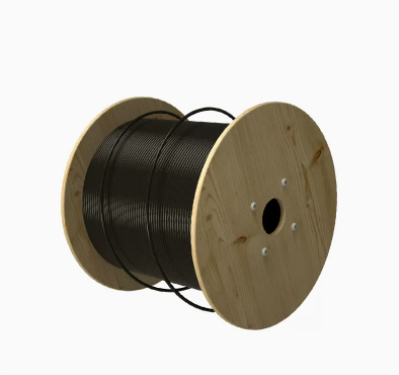
Packaging is another aspect of supplier evaluation. Products are typically packed in carton boxes for smaller items, while bulk cables may be shipped on wooden drums or customized packaging. Proper packaging is crucial to prevent damage during transit, especially for cables with delicate fiber cores. Buyers should inquire about the packaging standards to ensure that the product arrives in pristine condition. Additionally, the supplier's location, such as Guangdong, China, can influence logistics costs and lead times. Buyers should factor in shipping costs and potential customs duties when calculating the total cost of ownership.
Quality Control and Long-Term Procurement Considerations
Ensuring the long-term reliability of fiber optic cables requires a robust quality control strategy. Buyers should demand test results that verify the cable's mechanical and optical properties. Key parameters to verify include the allowed tensile strength, lateral pressure resistance, and operating temperature range. The observed specifications provide a baseline, but buyers should insist on batch-specific test reports to confirm that the delivered product meets these standards.
For long-term procurement, the consistency of the supply chain is vital. Buyers should establish relationships with suppliers who can guarantee consistent quality over time. This involves regular audits of the supplier's production processes and quality management systems. The presence of ISO9001 certification is a positive indicator, but it should be complemented by ongoing performance monitoring. Buyers should also consider the availability of spare parts and replacement cables to ensure network continuity in case of failures.
The choice of connector type is another long-term consideration. Common connector types include UPC and APC, and the choice depends on the specific application requirements. APC connectors, with their angled physical contact, are often preferred for high-performance applications to minimize back reflection. Buyers should ensure that the connectors are compatible with their existing infrastructure and that the supplier can provide matching patch cords or adapters.
Finally, buyers should plan for future scalability. As network demands grow, the ability to upgrade or expand the infrastructure without replacing the entire cabling system is crucial. Selecting cables with a higher fiber count or those that support future fiber types can provide this flexibility. By focusing on quality, compliance, and scalability, buyers can secure a reliable supply of aramid yarn fiber optic cables that meet their current and future needs.
Comparative Analysis of Cable Configurations
To assist buyers in making informed decisions, the following table compares common cable configurations based on observed market data. This comparison highlights the differences in application, material, and performance characteristics.
| Feature | Indoor Patch Cord | Outdoor Armored Cable | Indoor Bundle Cable |
|---|---|---|---|
| Primary Application | FTTH, Data Centers | Underground, Aerial, Duct | Office, Building Interiors |
| Sheath Material | PVC, LSZH | PVC, LSZH, PU | PVC, LSZH |
| Strength Member | Aramid Yarn | Aramid Yarn + Armor | Aramid Yarn |
| Fiber Type | G652, G657, OM3 | G652, G655 | G652, G657 |
| Operating Temp | -20°C to +60°C | -40°C to +70°C | -20°C to +60°C |
| Typical Diameter | 2.0mm or 3.0mm | Varies (Armored) | Varies |
| Packing | Carton Box | Wooden Drum | Carton Box / Custom |
This table illustrates that while all configurations utilize aramid yarn for strength, the specific materials and construction vary to meet the demands of different environments. Buyers should use this comparison as a starting point for further technical discussions with suppliers.
Final Procurement Recommendations
In conclusion, sourcing aramid yarn fiber optic cables requires a balanced approach that considers technical specifications, compliance, cost, and supplier reliability. Buyers must verify that the selected cable meets the required tensile strength and environmental ratings for their specific application. Compliance with certifications like RoHS and ISO9001 is non-negotiable for ensuring safety and quality. While cost is a significant factor, the lowest price should not come at the expense of reliability. By conducting thorough supplier evaluations and implementing strict quality control measures, buyers can secure a supply chain that supports the long-term success of their fiber optic networks. The flexibility offered by customization and the availability of various fiber types and connector options further enhance the value proposition of these cables, making them a versatile choice for modern communication infrastructure.
FAQs
What certifications do aramid yarn fiber optic cables typically have?
Most products carry RoHS and ISO9001 certifications, with some also listing CE or SGS. These marks indicate compliance with hazardous substance restrictions and quality management standards required for international markets.
Which fiber types are available for aramid yarn cables?
Available options include single-mode G652, G655, G657, and multimode types like OM1, OM2, and OM3. Buyers must select the specific type that matches their network architecture and distance requirements.
Can I customize the length and packaging of these cables?
Yes, customization is available for length and packaging options like carton boxes or wooden drums. Suppliers often offer OEM services to meet specific project needs while maintaining standard product quality.
What is the allowed tensile strength for these cables?
The observed tensile strength ranges from 100N to 1000N, suitable for standard installation pulling forces. This range ensures the cable withstands mechanical stress without risking fiber breakage during deployment.
Where are these aramid yarn fiber optic cables manufactured?
Products originate primarily from China, with specific manufacturing hubs noted in Guangdong. Buyers should verify the supplier's export history and adherence to international standards when sourcing from this region.
How long is the delivery time for these cables?
The standard delivery time is typically 3 to 5 days for standard orders. However, lead times may vary based on order volume, customization requirements, and current production capacity.
What materials are used for the outer sheath of these cables?
Common sheath materials include PVC, LSZH, and PU, chosen for durability and fire safety. LSZH is preferred for indoor applications to minimize toxicity during combustion in public spaces.